New American Cinema in 10 films
From the late 1950s American filmmakers worked outside the studios in two directions: rough, improvised stories and bold experiments with the film image itself. These ten films follow both paths.
- 1Meshes of the Afternoon 1943Maya Deren · IMDb 7.8A woman drifts through a dreamlike loop of a house, a key and a hooded figure. Deren's 1943 short is the precursor the whole American avant-garde looks back to.
Next: Window Water Baby Moving
Deren's 1940s dream film gives way to the first postwar generation; Brakhage turns the camera on his own family and on the act of seeing. - 2Window Water Baby Moving 1959Stan Brakhage · IMDb 7.5Brakhage films the birth of his own daughter in silent, intimate close-ups. It shows how personal and bodily the new cinema could be.
Next: Shadows
From the lyrical poem to the street, we move to the narrative side of the movement, where actors improvise in New York apartments. - 3Shadows 1959John Cassavetes · IMDb 7.2Cassavetes built this story of young people in New York out of improvised scenes. It is the founding film of American independent drama.
Next: The Connection
Cassavetes' improvised drama is followed by Clarke's, who pushes the same freedom further by mixing fiction with a filmed-documentary frame. - 4The Connection 1961Shirley Clarke · IMDb 7.0Jazz musicians wait in a room for their drug dealer while a film crew watches. Clarke turns a stage play into a rough, documentary-like experiment.
Next: Scorpio Rising
The mood turns from jazz and talk to image and music, as Anger builds a ritual out of leather, chrome and pop songs. - 5Scorpio Rising 1963Kenneth Anger · IMDb 6.8Anger cuts motorcycle culture to a stream of pop songs and borrowed images. It mixes desire, ritual and irony, and has been copied in music videos ever since.
Next: Empire
Anger's crowded, noisy montage is answered by the opposite extreme: one fixed shot, no cuts, and almost nothing happening. - 6Empire 1964Andy Warhol · IMDb 3.7Warhol points a fixed camera at the Empire State Building for about eight hours. Cinema is reduced to time and light, and the audience must decide what to do with it.
Next: Chelsea Girls
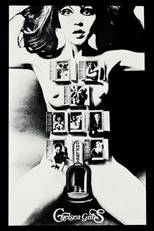
Warhol leaves stillness behind and turns to talk, using two screens and a cast of Factory regulars. - 7Chelsea Girls 1966Andy Warhol · IMDb 5.6Two reels are projected side by side, with sound switching between them. Warhol's Factory crowd drifts through the rooms of a New York hotel.
Next: Wavelength
From Warhol's loose, social cinema we move to a strict one, where the film's own design is the subject. - 8Wavelength 1967Michael Snow · IMDb 5.3One slow zoom crosses a loft over about forty-five minutes, with a few human events along the way. It became the model of structural film.
Next: Zorns Lemma
Snow's single move is followed by Frampton's rule-bound system, which turns language and image into a puzzle. - 9Zorns Lemma 1970Hollis Frampton · IMDb 6.4Frampton replaces the alphabet with images in a strict three-part design. A cool, witty lesson in how we read signs and pictures.
Next: A Woman Under the Influence
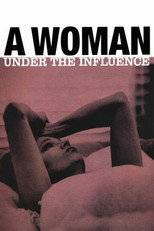
After the austere experiments, we return to story and character, and to Cassavetes at the height of his powers. - 10A Woman Under the Influence 1974John Cassavetes · IMDb 8.0Cassavetes follows a wife and mother whose behaviour troubles her family. Made outside the studios, it shows the narrative wing at its most mature.




Where next: the school page lists many more films, and the French New Wave guide shows another group of young directors breaking the rules in the same years.
Learn more about New American Cinema and Structural Film →


